Chapter Three
Vienna
August 3-15, 1814
The Brotherhood of the Open Measure. A Harmonic Engine beneath the University of Vienna, a cult leader conducting experiments on human voices, and a ritual deadline of August 15. Fourteen sessions of investigation, espionage, and a final assault on the Sealed Anatomical Theatre.
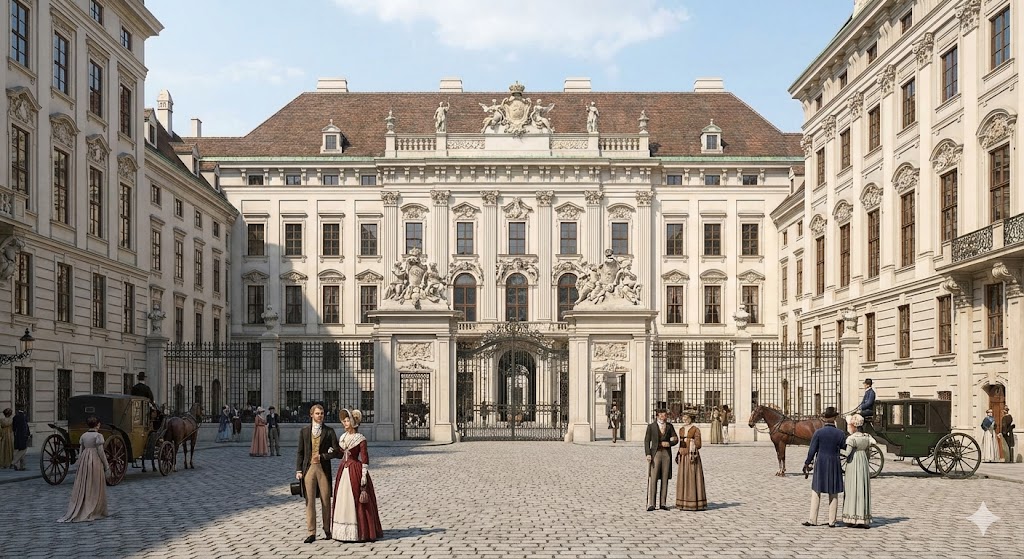
The investigators came through the Linienwall customs gate on the morning of 3 August 1814 with a coach full of firearms, and lost every one of them to Inspector Novak’s men within the hour. Vienna was packed to the rafters for the Congress, loud with church bells and waltzes and four languages at once, and they took two suites at the Palais Kinsky for the sake of a proper address. As they went upstairs, a forgettable man in the coffee room watched them over an untouched cup and then left. He was the first of a great many watchers.
Read the whole chapter recap
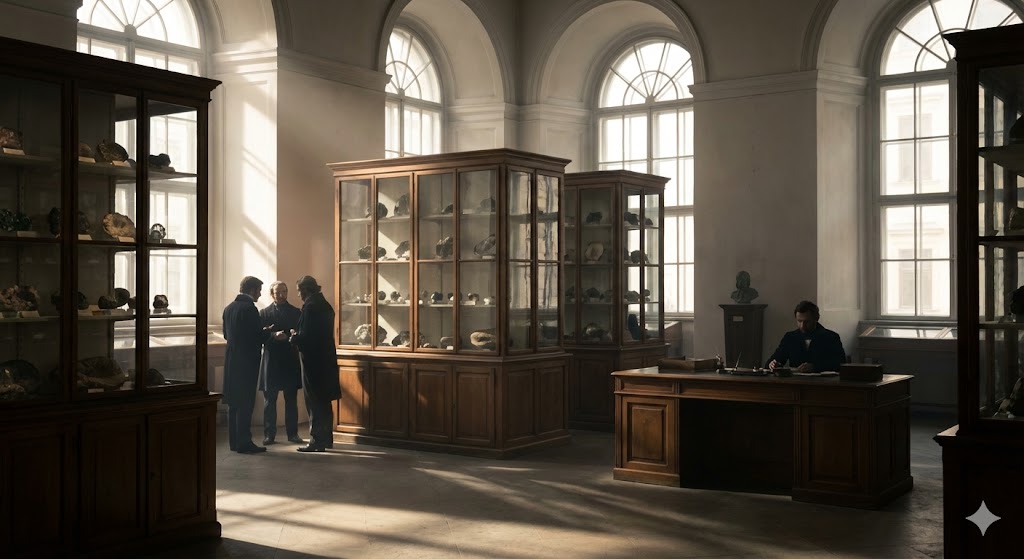
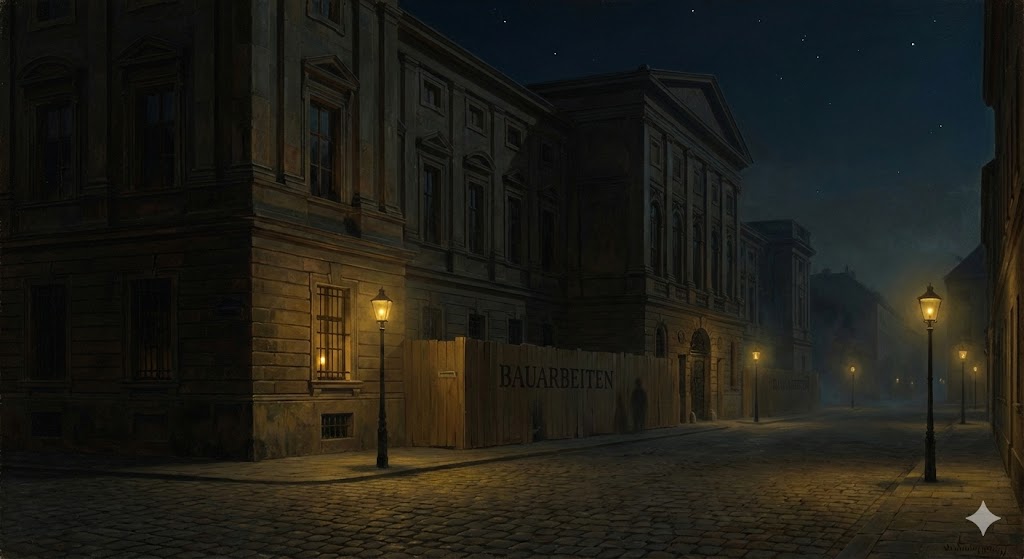
The next day, behind a locked door at the Naturhistorisches Institut, Dr Ernst Falkner gave them the shape of the thing. Musicians had been vanishing from the city for three years, always talented, always foreign, always without family nearby to ask questions, and his own daughter Margaret had been one of them after an audition with Professor Albin Herzfeld. Herzfeld had reopened a sealed anatomical theatre beneath the University for “acoustic research.” Adler found the voices, Count Trautmannsdorff paid for them, and Baron von Kaunitz watched the salons. In a Leopoldstadt attic, among the empty bottles, Herzfeld’s former assistant Dr Brenner told them what the research had become: an instrument thirty feet tall, built out of living people, their voices cut from their throats and wired into the machine, still singing. Brenner did not see morning. Once Charlotte and Georgiana had left the room, Varrio decided the man was a loose end and pressed a pillow over his face. Brenner squirmed free, slid off the bed, and broke his neck on the bedframe, and Varrio tucked a brandy bottle under his arm and walked out saying “we’re good, let’s go.” The next night a street urchin pressed a rose into Varrio’s hand and muttered “Sie haben ihn gefunden” (they found him). The court composer Reichenbach, sleepless and shaking in his Hofburg office, had seen the thing himself (pipes of bronzed human throats, bellows of breathing lungs, severed hands wired to the keys and a brain in amber conducting at its heart), and Anna Lindqvist, a Swedish soprano Adler was grooming, was meant to give it the high register it lacked.


Society did the rest. Countess von Thun took a liking to Emma’s honesty, Kaunitz sent Emma poetry and walked her round the garden asking where they had been, and Graf von Sternberg waltzed with her so well that Thomas went red to the collar. At the Imperial reception Adrien overheard Kaunitz arranging a meeting in the medical wing, the orchestra struck up Beethoven’s Seventh, and everyone who knew what lay under the city heard the Engine in it. Then Lord Harcourt, greyer and scarred, looked across the Redoutensaal at Georgiana with Lady Honoria beside him. While the party danced, the police searched their rooms, took every occult book they owned along with Marina’s notebook, and left a single white rose on Emma’s dressing table.

At Palais Modena the next morning, Harcourt named the enemy whole. The Aeternum Choir was one network of cells, each charged with a segment of a grand canticle, and five successful rituals before the solstice of 1815 would open the way for Yog Sothoth. London, Lyon and Venice had already fallen, and Vienna was the most advanced of the rest. He pinned Adrien, Thomas and the Colonel into the Order, and the day went to blood. Adrien and Charlotte talked their way into Trautmannsdorff’s study, heard his confession over half-packed trunks, and delivered him kicking into Harcourt’s custody. On the Graben, four men fell on Varrio and Colonel Moreau. Varrio got away with a knife wound in his thigh and ended the day in police custody, until Dr Fischbein shouted Austrian civil procedure at Vogel and had him released, and the Colonel bled to death on the cobblestones. That night a Nightgaunt came through Charlotte’s window, raked her down and tried to carry Emma off, until Emma bit a chunk out of its neck and Adrien pinned it to the wall with his sword. Charlotte survived it, and decided this would be her last mission. Katherine Ward arrived from Kraków the next morning on Harcourt’s orders.
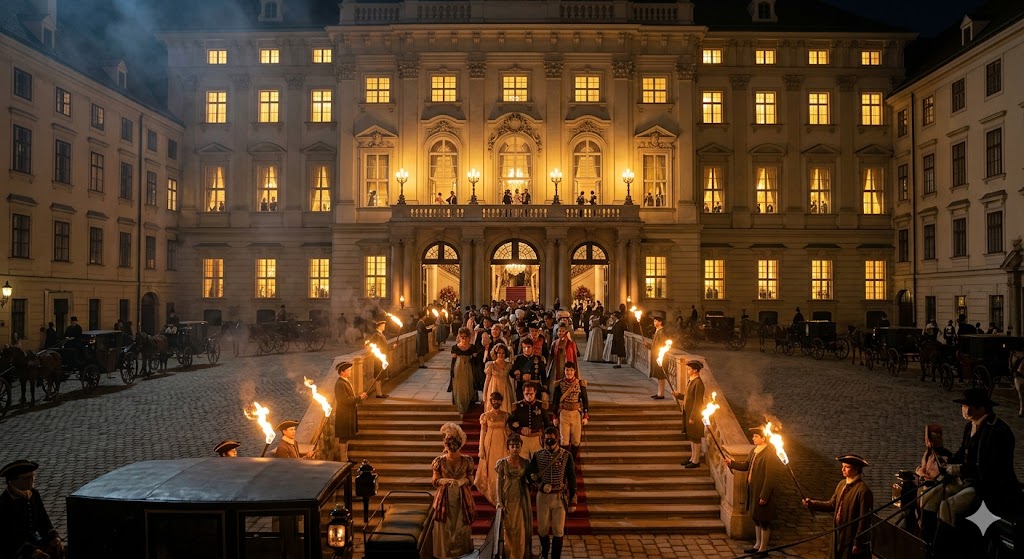
At the Countess’s musical afternoon, Anna sang and a wine glass cracked. Her voice carried the Engine’s own frequency, inverted, the missing piece it had always needed, and the bruises under her high collar showed what her “training” cost. That night, at the masquerade in the Palais Lobkowitz, the party set the Russians on Adler. Georgiana told Count Volkonsky that Adler was the man behind his missing friend, and Katherine’s cape swallowed Anna in the crowd. Then the great stained-glass window came in, and a bronze-scaled Wächter dropped onto the chandelier. Mikhail died, and Vladimir after him. Fire turned out to be the answer, and Varrio burned two of the things to death with a cognac-soaked chair leg. Georgiana cut both of Adler’s heels as he ran, and the tuning fork he used to command the creatures went into Katherine’s hand, then Georgiana’s, and has not left Georgiana since. Earlier in the evening Varrio had punched Sternberg, Thomas had cheerfully taken up the duel, Kaunitz had made a soft threat about accidents, and a Major Thurner had handed Georgiana the key to Thaliastraße 12. They interrogated Adler in its cellar until dawn. The Wächter, he admitted, were the failed by-products of the Brotherhood’s integration process, and the name Caroline Hartley came up as the next voice.
Prince Metternich took Adler off their hands at the Ballhausplatz, and the only crack in his composure came at the name Kaunitz (three seconds of perfect stillness before he drank his coffee). He gave them a writ under his seal, cleared the watch from the University on the night of their choosing, and arranged for Captain Vogel, the Brotherhood’s man in the police, to be relieved of his credentials and his sidearm. Fischbein used the writ to walk the stolen books out of Vogel’s evidence room. By then Caroline had already gone to an audition at the University and not come home. At dawn on the 10th, Thomas fought Sternberg in the mist outside the Linienwall, pistols first and then sabres, and ran him through the chest. Emma told him she would shoot him herself if he ever did it again, and then kissed him. That evening Adrien, Freddy and Thomas kicked in the door at the Black Bear, where Klaus and Werner Bauer, the grave robbers who had killed the Colonel and been quietly released by Vogel, were lodging. Klaus died there. Werner came away bound in the carriage, alongside a woman’s arm in salt and a hand-drawn map of the University basement.
The last days were spent assembling an army. Nell, a pickpocket from Katherine’s Southwark past, scouted the University with Katherine and brought back the worst news of all: Herzfeld meant to finish on the 13th, not the 15th. Major Andrei Volkonsky pledged Russian soldiers, Captain Ferrante brought Sardinian mercenaries for two hundred florins, and Georgiana and Adrien went into the Liber Ivonis and the De Vermis Mysteriis. Georgiana came out laughing and weeping, and Adrien came out with the Pyrenees playing across the parlour window, but between them they found a counter-frequency that could collapse the Engine’s harmony. At the war council in the Heuriger garden, the third Wächter came through the pergola. Andrei put a bread knife through one eye, and Freddy put a ball through the other with “This is for the Colonel.” Ferrante doubled his price on the spot, and Fischbein amended the contract before he had finished saying it. That night Georgiana retuned the fork, and saw Herzfeld waiting in his theatre with a fork of his own. Kaunitz, they learned, had already fled south toward Graz.
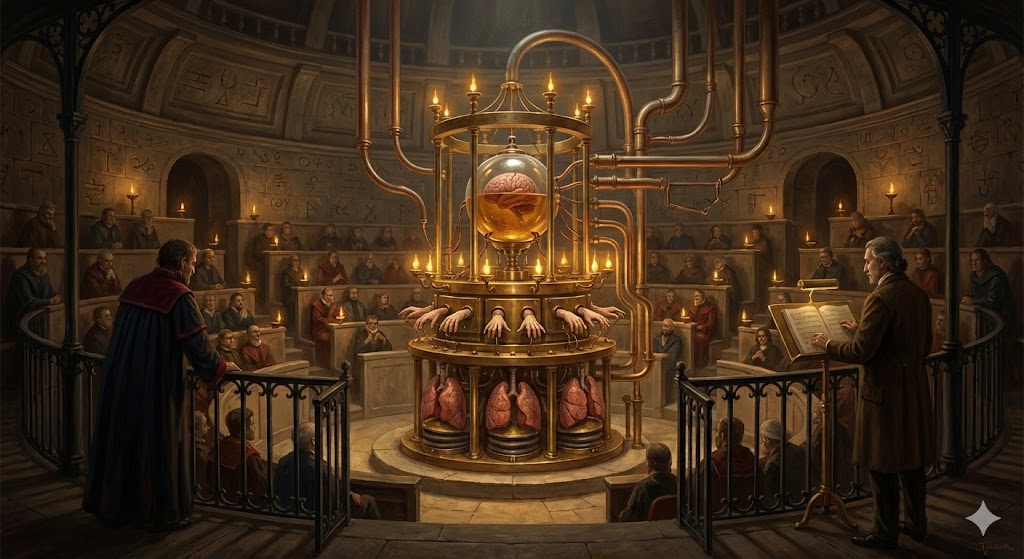
They went in before dawn on 12 August, in two teams. The rescue party found Caroline’s room empty and went down through the old Roman tunnels, while the main party went up to Herzfeld’s office and found the passage behind the bookcase. In the Sealed Anatomical Theatre the Engine stood on its platform among surgical tables, and the chorus dead came down the tiers at them, singing out of the holes in their chests. Herzfeld held a scalpel to Caroline’s throat. The ritual took Varrio’s sight, sent Adrien into hysterics and Freddy into amnesia, and bled Thomas from the ears. Adrien’s rifle shot took Herzfeld in the shoulder, and Georgiana struck the fork against her sword. Emma found the three great baffles that fed the harmonics, and she, Thomas and Freddy pulled them down one by one. Varrio, whose mind had finally given out, threw himself on Herzfeld with his teeth and nails until Thomas had to shoot him. Ferrante dragged the professor clear, and Georgiana poured the last of the counter-ritual through the fork. The Engine stuttered, went silent, and rotted where it stood. Katherine stitched Caroline’s throat closed, and the Russians carried Herzfeld away to answer for the missing musicians.
They came up into the blue of an ordinary Vienna morning, full of carriages and birdsong and a baker’s boy shouting. The Sardinians took their pay and went looking for a bar, and Nell was gone. Georgiana carried two marks out of the theatre that will not wash off: a pure white streak through her hair, and skin across the back of her left hand gone smooth and iridescent. The Brotherhood’s Vienna cell was finished, and the road ran on to Trieste, Egypt and India.
The sessions
- Arrival in Vienna August 3, 1814
- The Opera and the Dead Man August 4, 1814
- The Countess and the Salon August 5, 1814
- The Hofburg Reception August 6, 1814
- The Knife and the Masquerade August 7, 1814
- A Bite in the Dark August 7, 1814
- Whispers, Widows, and Wounded Warriors August 8, 1814
- The Duel, the Diva, and the Demon August 8, 1814
- The Burning Ball and the Broken Baron August 8, 1814
- The Fork in the Road August 9, 1814
- The Duelling Ground August 9, 1814
- The War Council
- The Descent August 12, 1814
- The Theatre August 12, 1814